
Illustrative image
Electric mobility
Generation, storage and charging in the same car park.
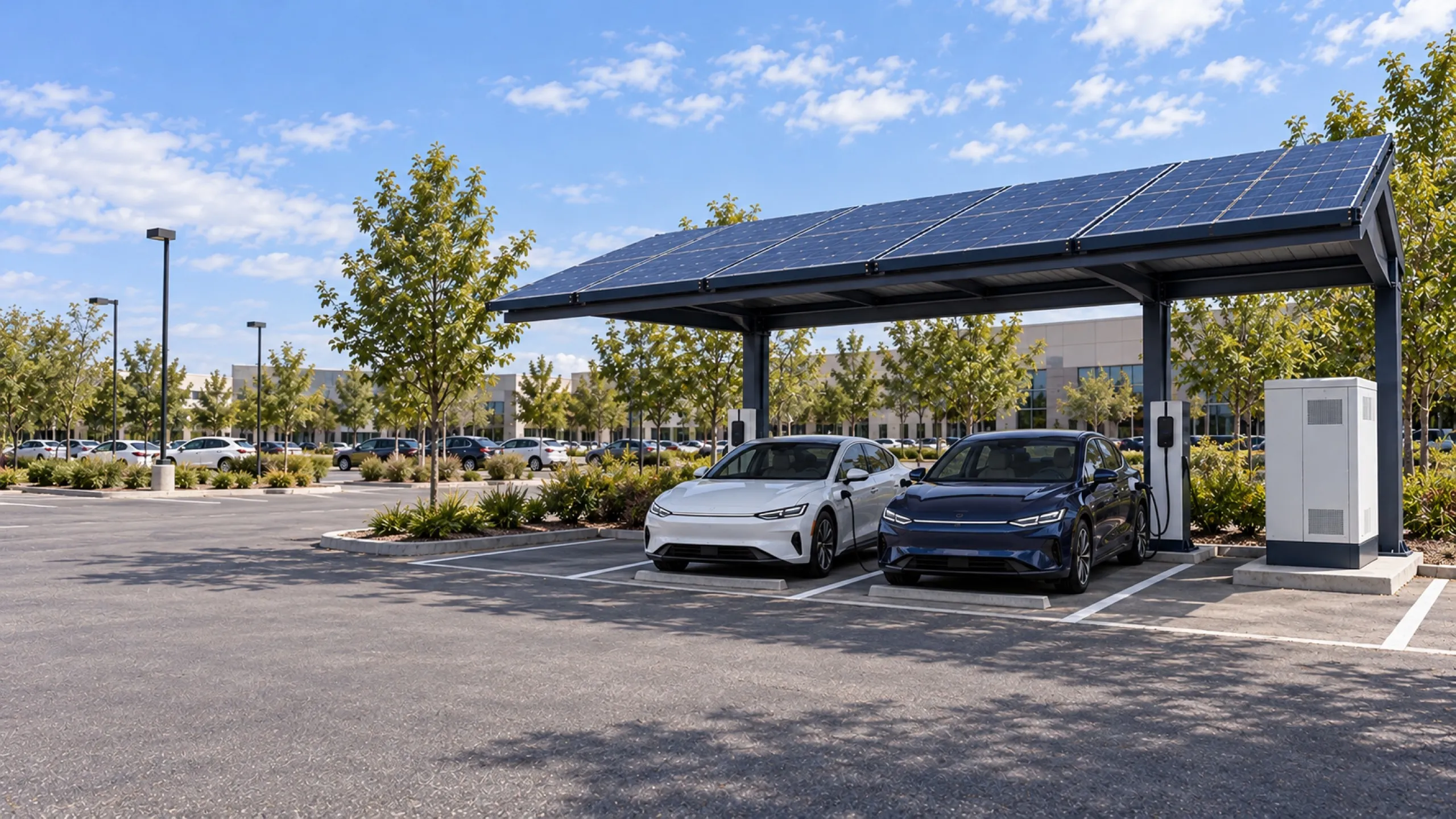
Electric vehicle charging increases a car park’s energy demand. A solar carport combines panels over the parking spaces, battery storage and chargers, so vehicles charge with energy generated on site and the grid connection gets support when demand rises.
Whether the grid connection needs upgrading depends on demand, available capacity, usage profile and system design.
Several vehicles charging at once can require more power than the available connection provides. In some places the grid is limited or doesn’t exist.
- Charge vehicles with solar energy generated in the car park.
- Support peak demand periods with stored energy.
- Provide shade and protection for parked vehicles.
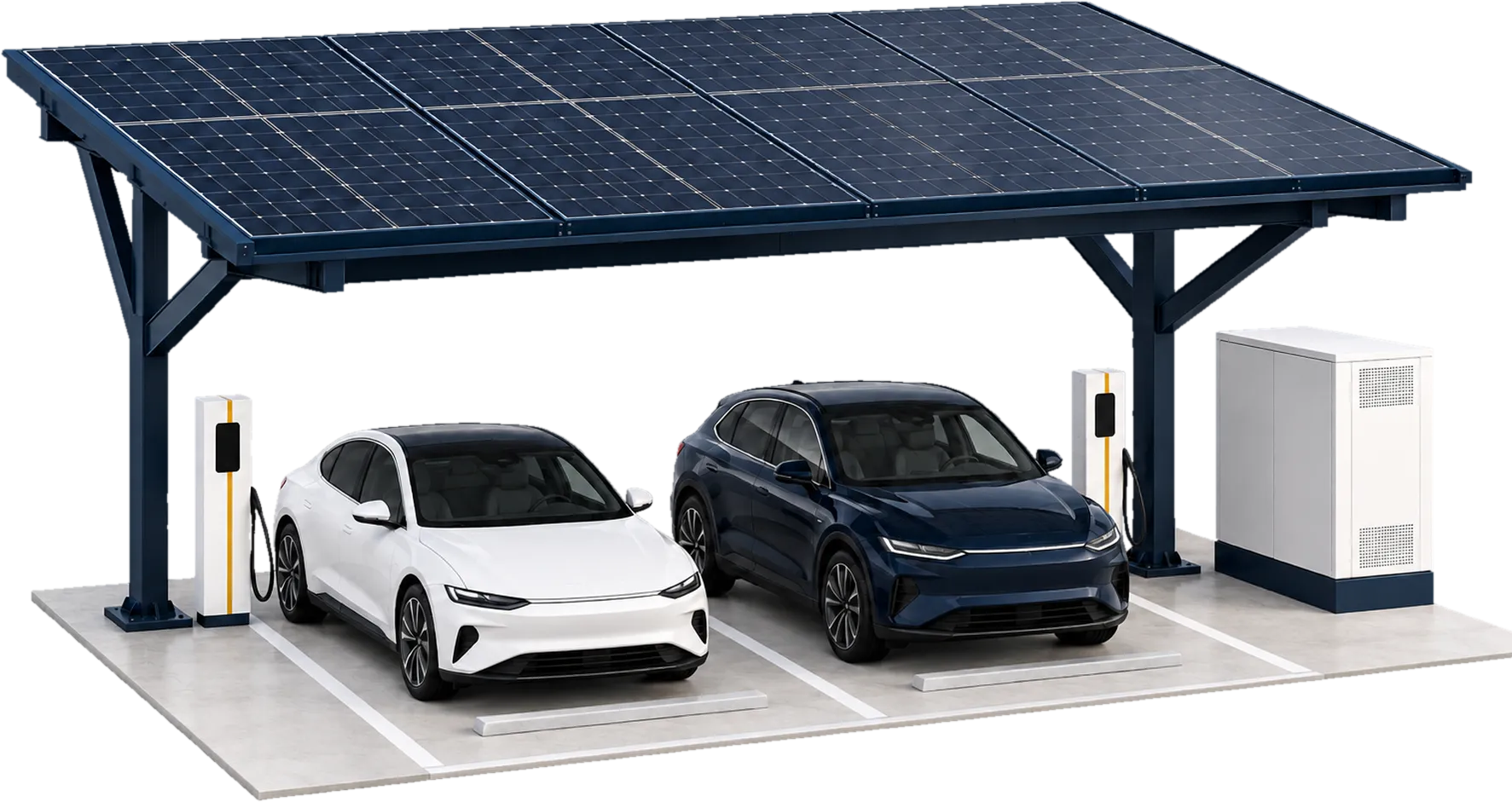
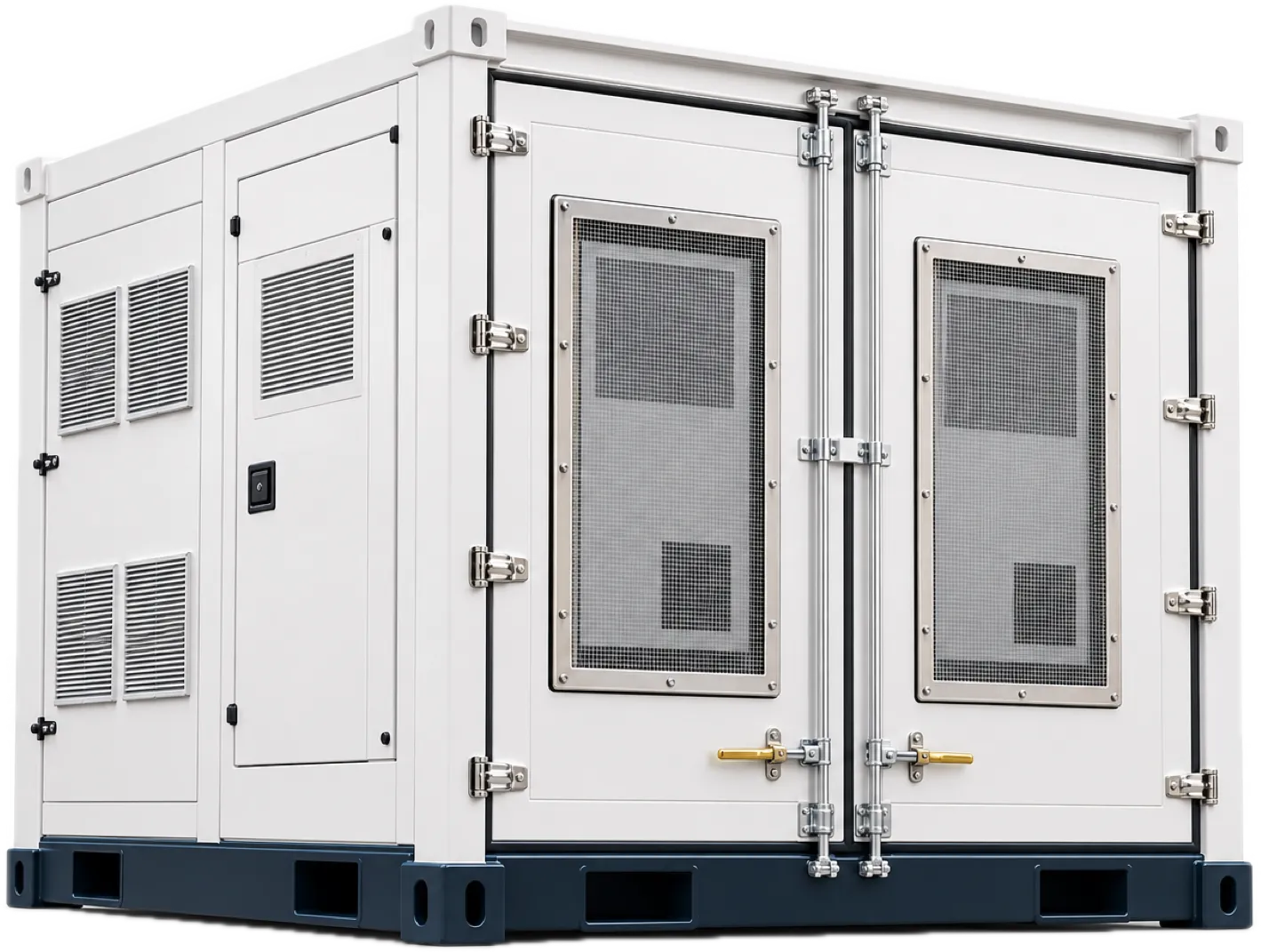
The carport combines a covered structure with solar panels, a battery system and AC and DC chargers. Solar supplies the charging and recharges the batteries, and the batteries supply energy when demand rises. The system can run grid-connected or off-grid, depending on the project.
Companies and fleets
Charging company vehicles during the working day.
Retail and services
Customer parking with charging available.
Sites with a limited grid
Charging where the connection is limited or doesn’t exist.
- The number of vehicles and how long they stay parked determine the chargers.
- The available connection and demand determine the storage capacity.
- The available space determines the size of the structure and the solar generation.
Every unit has its datasheet and manual published, and inverter–battery compatibility is documented.
Tell us where you need energy and which activities or loads you want to back up.
Ask about a charging solutionQuestions about electric mobility
How many vehicles can a Roxon Solar EV Carport charge?
It depends on the configuration chosen. Each carport size includes a different number and type of chargers, listed on its product page; larger configurations are defined per project.
Other sectors
- HomesBackup for essential loads and better use of solar energy.
- Commerce and businessEnergy that supports business continuity and better management of consumption.
- Industry and remote operationsPower supply and storage adapted to operating conditions.
- Agriculture and pumpingEnergy options for irrigation, pumping and productive activities.