
For professionals
So your customer never calls you about an outage again.
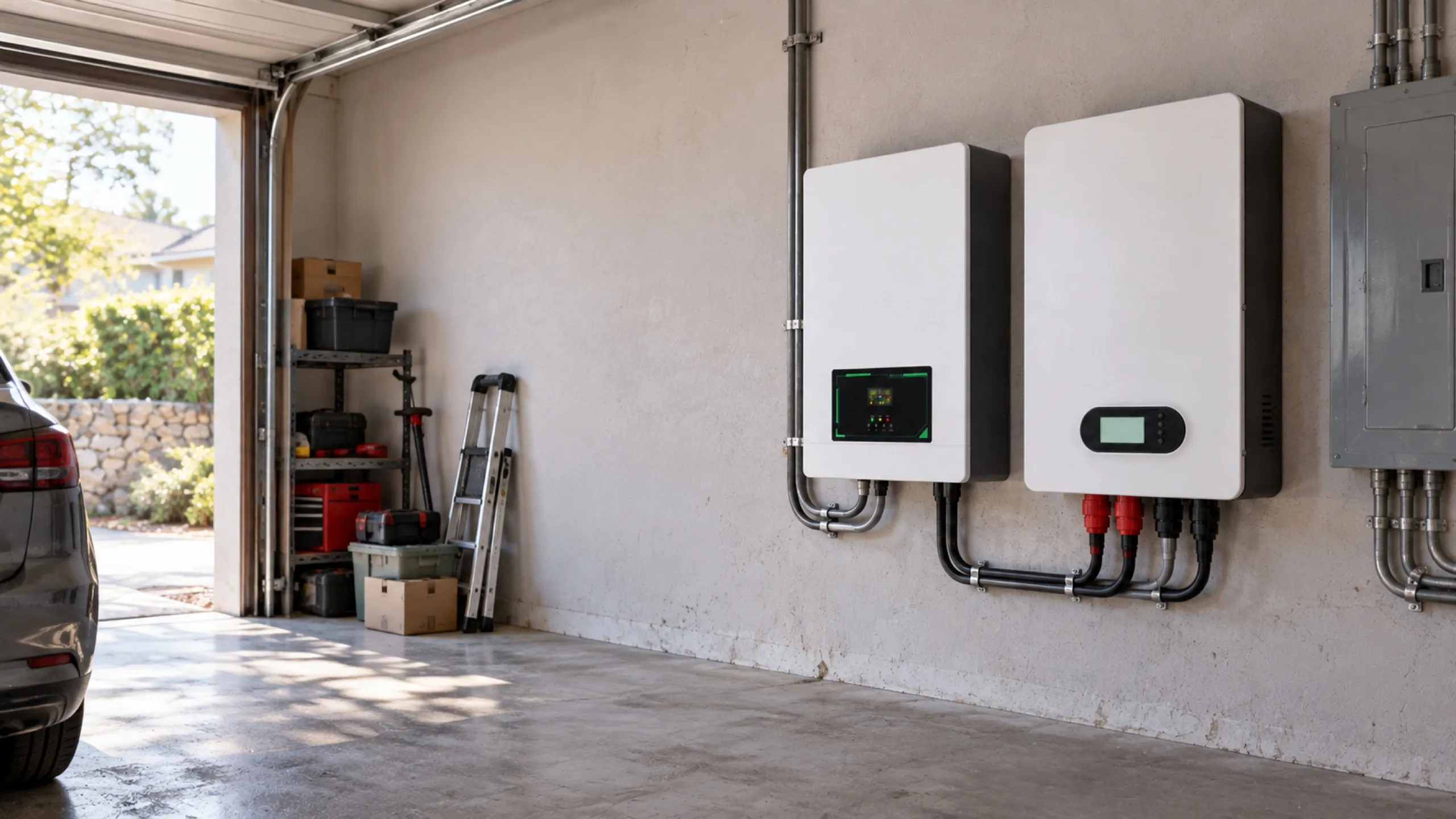
Outages, generators that run more than they need to and grid connections that aren’t enough have the same answer: battery first. Roxon supplies the equipment, from 6.2 kW for a home to 540 kW for a remote site, with its datasheet and its configuration.
One stock, any combination.
- 01
PDF datasheets and manuals
Specifications, wiring, protections and commissioning for every 48 V inverter and battery.
- 02
Documented compatibility
All three Roxon Hybrid inverters work with all three Roxon Lithium batteries, as listed in the compatibility table: all at 48 V, with BMS over CAN or RS485.
- 03
A single stock
With one voltage across the whole line, the same warehouse inventory works for every combination in the compatibility table.
- 04
Systems that grow
Up to 9 inverters of 8.6 or 11 kW in parallel, and batteries with automatic addressing.
Datasheets and manuals →Compatibility table →Sizing guide (in Spanish) →
Battery first; the generator when it’s needed.
- 01
From 15 kW to 540 kW per unit
Roxon Mobile, BESS, BESS Pro and BESS Gen cover everything from a single pump to a mining site, and the Solar EV Carport reaches 540 kWp and 1,000 kWh.
- 02
Specifications for engineering
Voltages, MPPT ranges, overloads, dimensions, weights and ingress protection ratings for every model, comparable side by side.
- 03
Remote-site conditions
IP54 or higher, operation from −20 to 50 °C, and skids with forklift pockets and lifting points.
- 04
Configuration per project
Send us the load profile and we’ll propose the equipment, parallel setup and storage.
Industrial storage (BESS) →Solar carport with EV charging →Industry and remote operations →
- Peak power and daily consumption of the load, in kW and kWh.
- Site voltage and phases: single-phase or three-phase.
- Available sources: grid, generator or solar panels.
- Hours of autonomy and site conditions: altitude and temperature.